For translocations to be successful, it is necessary to capture individuals from previously selected source populations, in the appropriate number and sex ratio.
However, before carrying out such translocations, it is necessary to conduct a thorough population viability analysis with the aim of evaluating the potential impact of individual extractions on the source populations and the viability of the recipient populations.
In the case of the LIFE Connect Ricotí project, the selected source populations, all located in Guadalajara -Spain- (Anguita, Páramos de Molina, and Atienza), have sufficient population sizes to provide the necessary individuals for the translocation program without compromising their survival.
The selection of release sites, located in Guadalajara and Cuenca -Spain- (Embid, Valeria, Pedro Izquierdo), has been based on the following criteria: (1) previous presence of Dupont’s lark; (2) habitat requirements; (3) connectivity; and (4) logistical and administrative feasibility.
Both source and recipient locations undergo pre- and post-release bird censuses. For the selection of release areas, the available habitat surface area was considered, prioritizing zones with greater suitable habitat surface.
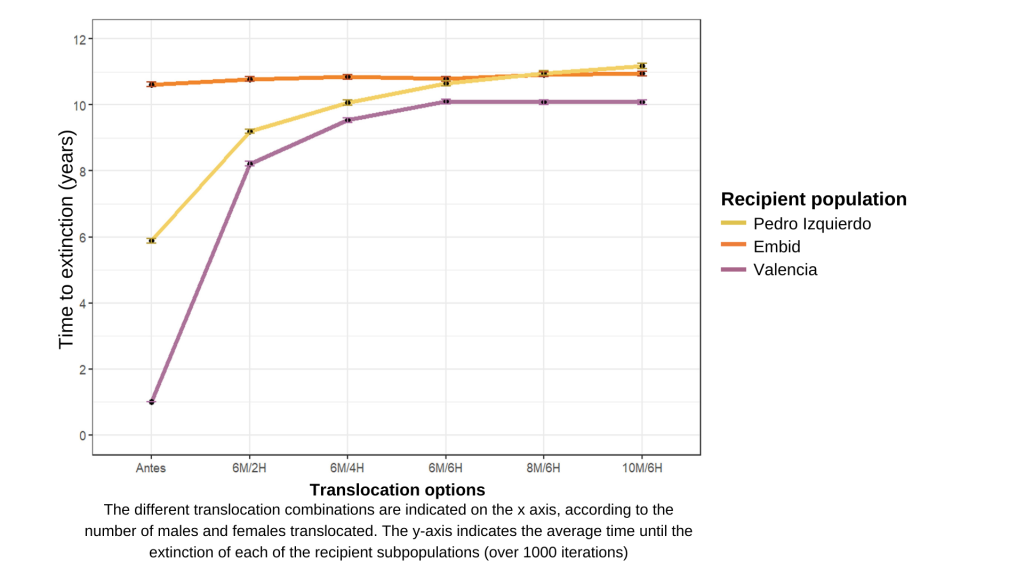
The results of the population viability analysis suggest that translocating approximately 8-10 individuals (6 males and 2-4 females optimally) over 3 years significantly extends the viability of recipient populations, while the extraction of these individuals has no significant effects on donor populations.