During the capture sessions of the LIFE Connect Ricotí project, larks are processed in the shortest possible time by taking a series of measurements (wing, third primary, weight, tarsus, etc.) and, in some cases, equipping them with radio transmitters and collecting blood samples. In addition, they are also marked with color rings that allow individual identification if they are later observed in the field.
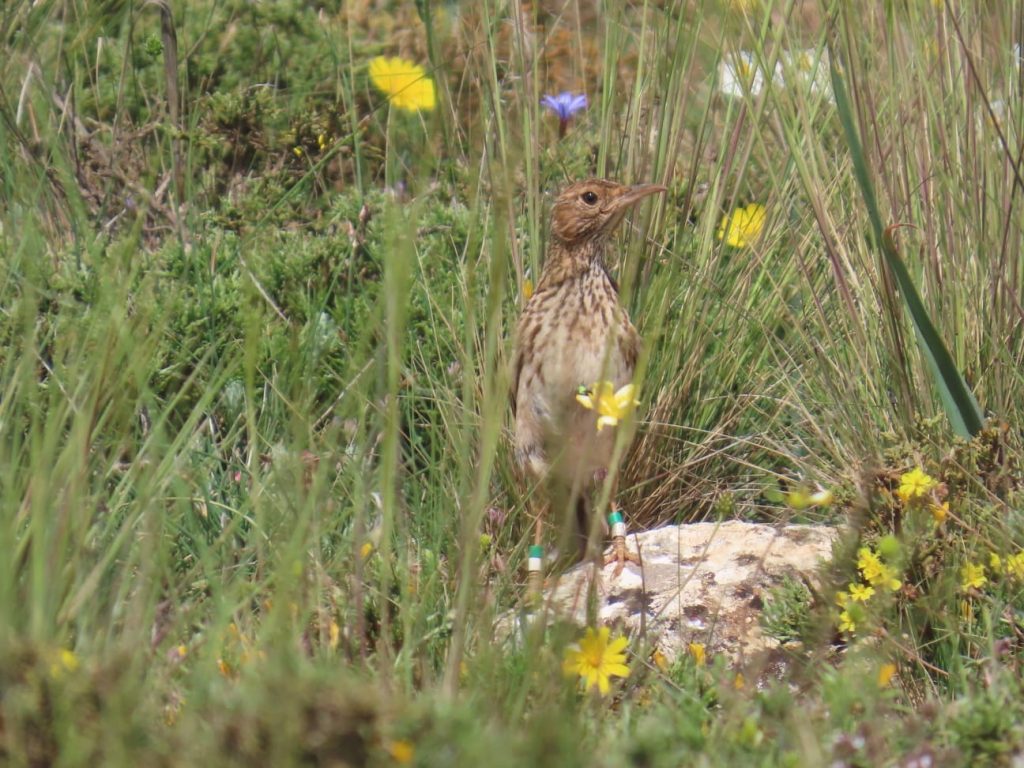
This is an effective and minimally invasive method that provides more detailed knowledge about some aspects of the biology of Dupont’s lark. For example, individual survival or movements to nearby localities. It could even be considered a citizen science method, where birdwatching enthusiasts visiting the steppes might detect and report individuals to the project team, adding valuable information to the database.
For any visual recapture, do not hesitate to contact us through social media, always keeping the location, date, and time of the observation.