During spring, within the LIFE Connect Ricotí project, we install pitfall traps in the different study areas. Their aim is to assess food availability for Dupont’s lark, a species highly dependent on the presence of arthropods in its environment. In another post on the website, we explain in detail how these traps work and why they are so useful in studies of trophic ecology.
Once the field campaign is over, it is time for the laboratory work, which usually takes place in autumn. The process always follows the same protocol to ensure comparability between years and between study areas.
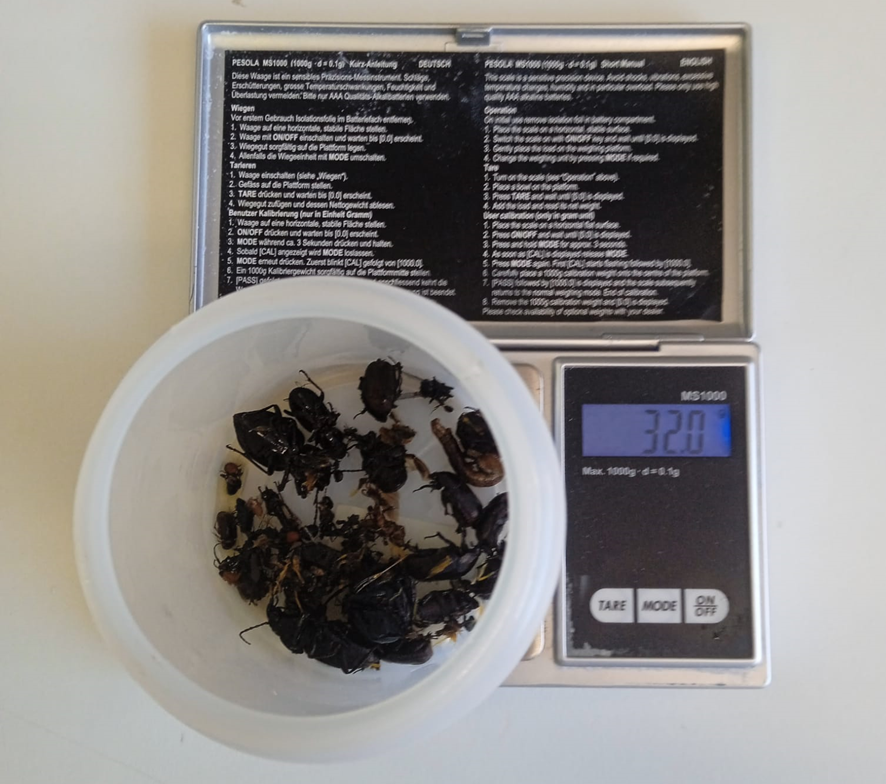
1. Weighing and initial preservation of sample
Each arthropod sample is carefully weighed to obtain accurate biomass data, a key parameter for estimating the amount of food available in each territory. After this first analysis, the samples are stored again in ethanol for later use.
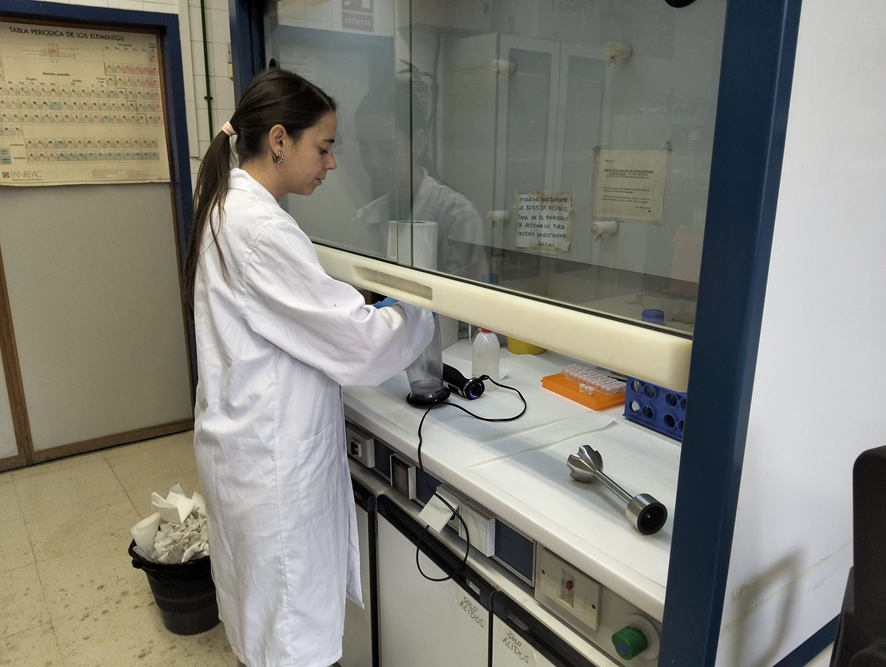
2. Grinding and preparation for metabarcoding
The next step consists of grinding the samples using an exhaustive and controlled procedure to avoid any type of contamination. This work is carried out under fume hoods, where the arthropods are processed until a homogeneous material is obtained. The resulting homogenates are stored in individually labelled Eppendorf tubes.
3. Molecular analyses
These samples are later sent to specialised laboratories that apply DNA extraction and DNA metabarcoding techniques, a method based on the use of specific genetic markers and high-throughput sequencing. Thanks to this technology, it is possible to accurately identify the different arthropod taxa, allowing us to determine which types of prey are available to Dupont’s lark and how its potential diet varies between localities.