
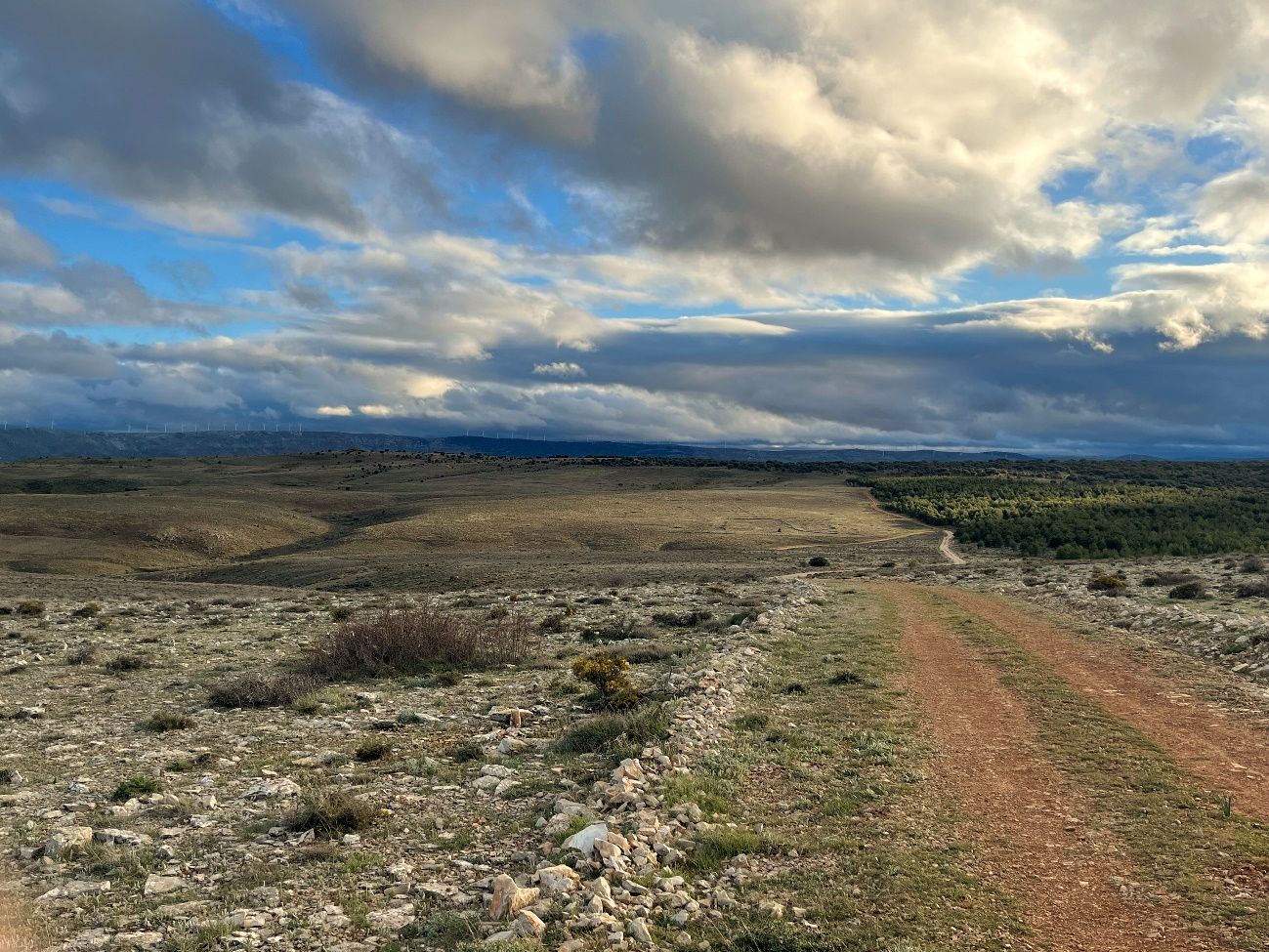
During the spring of 2024, the LIFE Ricotí project team carried out another census of the Dupont’s lark in the project’s action areas in Soria. The goal was to detect changes in population sizes for this species and assess the effectiveness of the management measures implemented within the conservation framework, such as clearing holm oaks in the Loma de la Lastra in Retortillo de Soria (Figure 1).
The results showed that conservation actions taken remain successful six to seven years after implementation. Increases in the number of males detected compared to previous numbers are remarkable in the two areas where holm oaks were thinned. However, in the area where the failed pine plantation was removed, the presence of Dupont’s lark remains limited to a single individual, the same count obtained in recent years.
The number of territorial males within the restored areas increased from 15 (before restoration) to 30 at the end of the study period, reaching a peak of 40 territorial males in the second year after actions were implemented (although these data correspond to two different years: 2019 in Layna and Barahona, and 2020 in Retortillo; Table 2).
In contrast, the number of territories in the reference areas decreased from 147 territories before restoration to 100 at the end of the study period (Table 2). Overall, the total number of territories, considering both reference and restored areas, decreased from 162 to 130 over the course of the study (Figure 2).
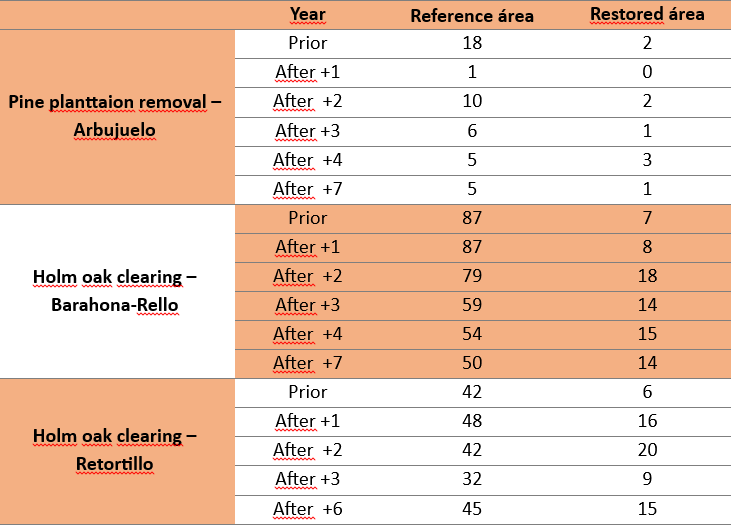
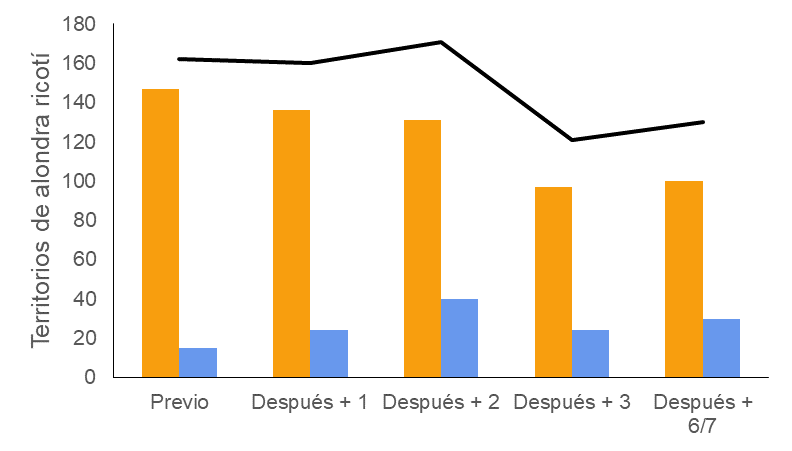
Reference areas showed a significant reduction over time, while in the restoration area, the number of territorial males increased significantly (Table 2 and Figure 2). The changes in the number of males were not uniform across all localities, as the pine removal area of Arbujuelo showed minimal or insignificant changes, while the holm oak clearing areas of Barahona-Rello and Retortillo had a positive impact on the number of species territories (Figure 2).
Our findings indicate that restoration actions positively influence the occupation of restored habitat by Dupont’s lark, especially where the steppe landscape has regained suitable structure and quality (Figure 1). This suggests substantial potential for similar actions in future restoration programs. The general decline observed aligns with the pronounced downward trend of the species across its Iberian range.
Notably, the extraordinary snowstorm and winter cold wave of 2021 deeply impacted the species in the study area (year after +4 for Arbujuelo and Barahona-Rello, after +3 for Retortillo), with an overall population decline of 66% across 14 monitored populations. However, the number of territories increased in restored areas (from 15 to 30: +200%; reaching a peak of 40 in +2: +267%), while it decreased in reference areas (from 147 to 100: -32%), suggesting that restored areas may have better resisted the general decline and the impact of stochastic events.
In summary, the monitoring confirms the effectiveness of active restoration of steppe habitats, benefiting endangered species such as Dupont’s lark. Restoring steppe habitats by clearing scattered holm oaks enables faster and more efficient recolonization by Dupont’s lark compared to pine plantation removal, indicating its suitability for future efforts. Additionally, prioritizing restoration actions near existing populations should be considered for maximum effectiveness.