
By Adrián Barrero
Functional Diversity and Its Relationship with Ecosystems
The analysis of functional diversity is crucial for understanding how species interact with their ecosystems and fulfill their roles within them. This type of analysis is based on studying a series of functional adaptive traits present in individuals of a species. These traits, which may be morphological, physiological, phenological, or behavioral, directly influence the biological efficiency and reproductive success of individuals (Figure 1). By extrapolating this analysis to entire communities, functional variations over time and space can be better understood, taking into account the relative abundance of each species.

The Role of Grazing in Steppe Bird Conservation
Grazing can modify ecological succession, vegetation composition, landscape heterogeneity, and food availability, which in turn influence the functional traits of bird communities. Based on this, and understanding that extensive livestock farming (Figure 2) is essential for conserving steppe habitats and birds, this study analyzes how the functionality of steppe passerine communities varies in different regions of Spain, considering the intensity of sheep grazing.

Study Methodology
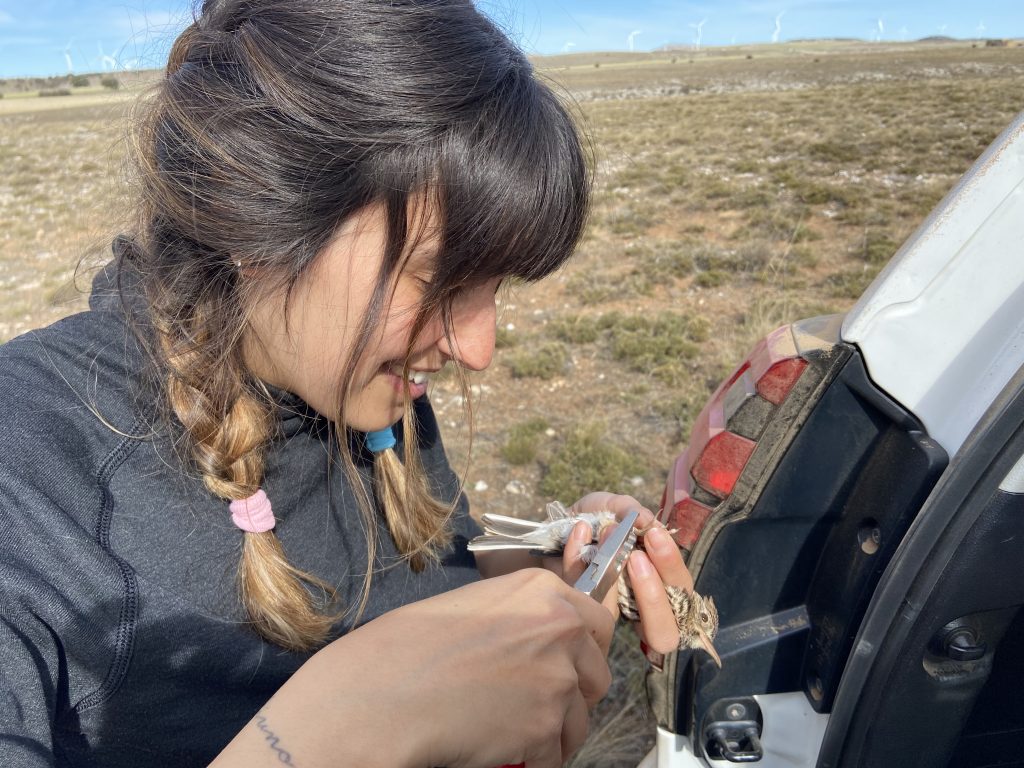
To carry out the study, we conducted bird surveys in various locations on the Iberian Peninsula, each subjected to different intensities of grazing. We used listening stations to survey the birds and associated their functional traits, obtained both from our own bird ringing data (Figure 3) and from databases such as AVONET. Grazing intensity was estimated using data from geolocators installed on the sheep herds.
Preliminary Results
Preliminary results indicate that there are significant functional differences among bird communities in the various study areas. These differences appear to be associated with latitudinal gradients reflected in the composition of bird communities. Additionally, grazing intensity has a notable impact on the morphological and reproductive traits of passerines (Figure 4). For example, in areas with higher grazing intensity, bird communities tend to have smaller individuals with lower mass and shorter beaks, characteristics typical of species inhabiting open environments. It was also observed that these birds tend to lay more clutches with fewer and smaller eggs.

Conclusions and Relevance for Conservation
Despite the reduction in the number of sheep in Spain and the trend toward more intensive livestock farming, our preliminary results show that grazing intensity remains an influential factor in the functional traits of steppe passerine communities. Therefore, extensive livestock farming plays a fundamental role as a conservation tool, especially given the alarming decline of these birds, largely due to habitat fragmentation and loss.
This study highlights the importance of maintaining appropriate grazing practices to preserve the biodiversity and functionality of steppe ecosystems, once again emphasizing the crucial role of extensive livestock farming in the conservation of steppe birds.